I Visited America’s First Car-Free Neighborhood. Here’s What I Found!
Through Suburban Seas
In the Valley of the Sun, seas of asphalt, lone big-box monuments, and strip malls unfurl toward the horizon. The desolate silence is only occasionally broken by an apologetic mid-rise apartment or hotel—structures so identical that without their porte-cochères and monument signs, no one could tell them apart. The light rail speeds through this suburban desert landscape before coming to a stop in Tempe. It pauses in front of what appears to be yet another apologetic mid-rise, one shying away from the corner of Smith-Martin and Historic U.S. 80 behind a veil of palo verde trees.
Yet, this building's modesty uplifts the street and the neighboring mid-rises across the six-lane road, perfectly complementing its inner charm. Welcome to the future of American urbanism. Welcome to the neighborhood of Culdesac Tempe.
A Different Kind of Place
As an Architect, I’ve studied and meandered through countless European plazas, walkable neighborhoods, and transit-oriented developments. Yet, experiencing Culdesac firsthand - right in the heart of America’s most car-dependent metropolitan valley - feels like something else entirely. This 17-acre oasis anchors the possibility that Americans crave something more than just another mid-rise apartment complex marooned in a sea of parking spaces.
Designed for Desert Living
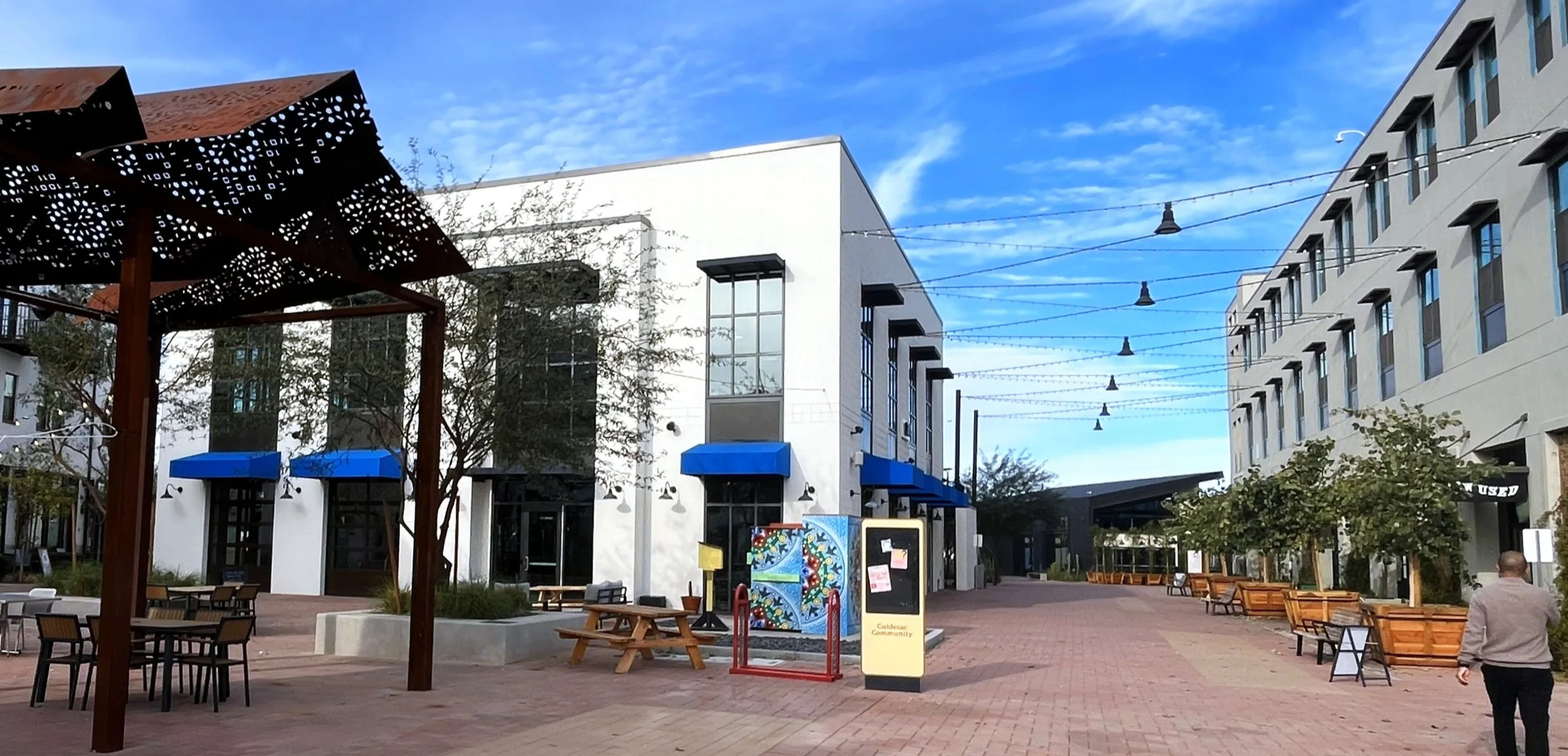
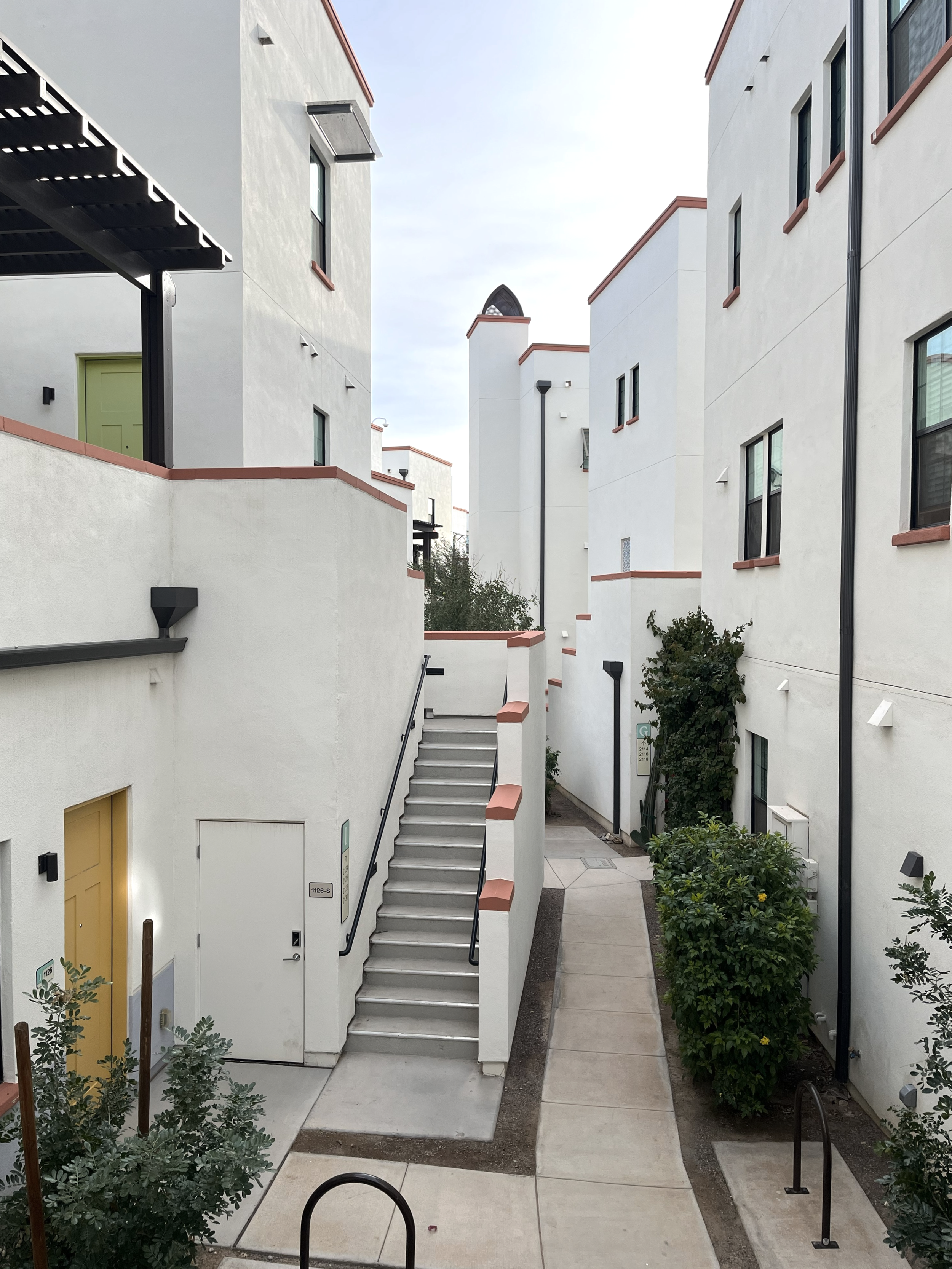
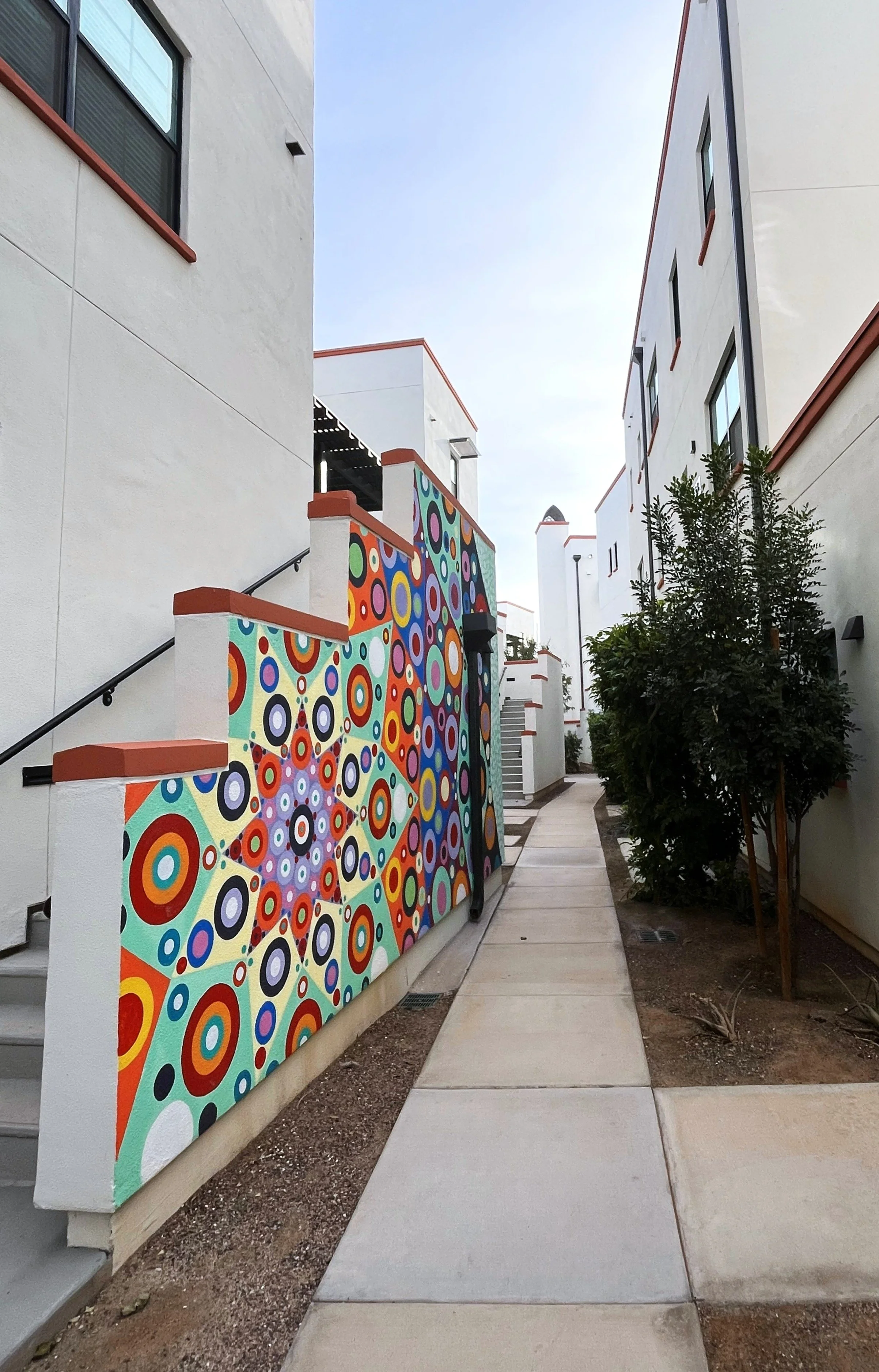
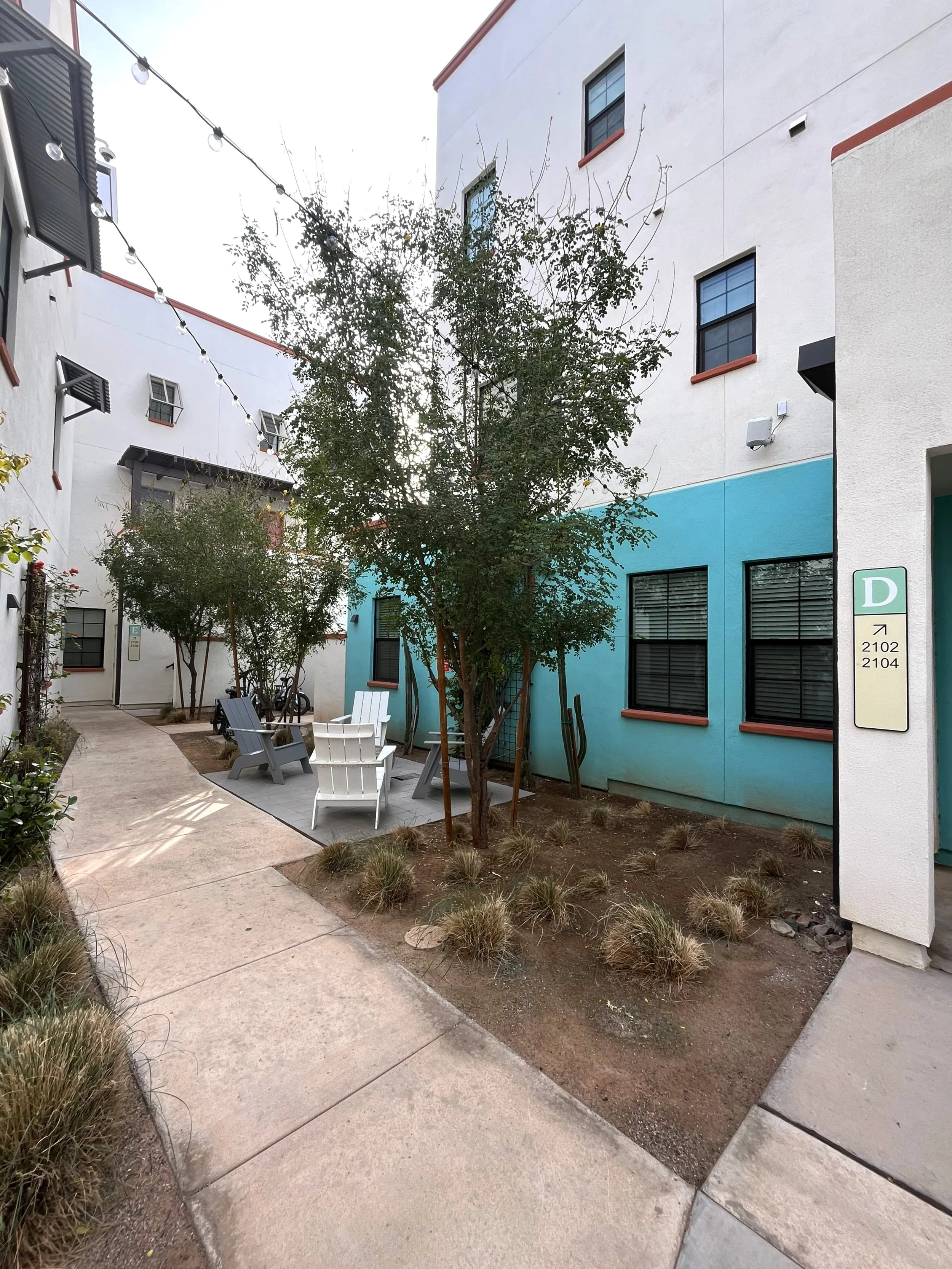
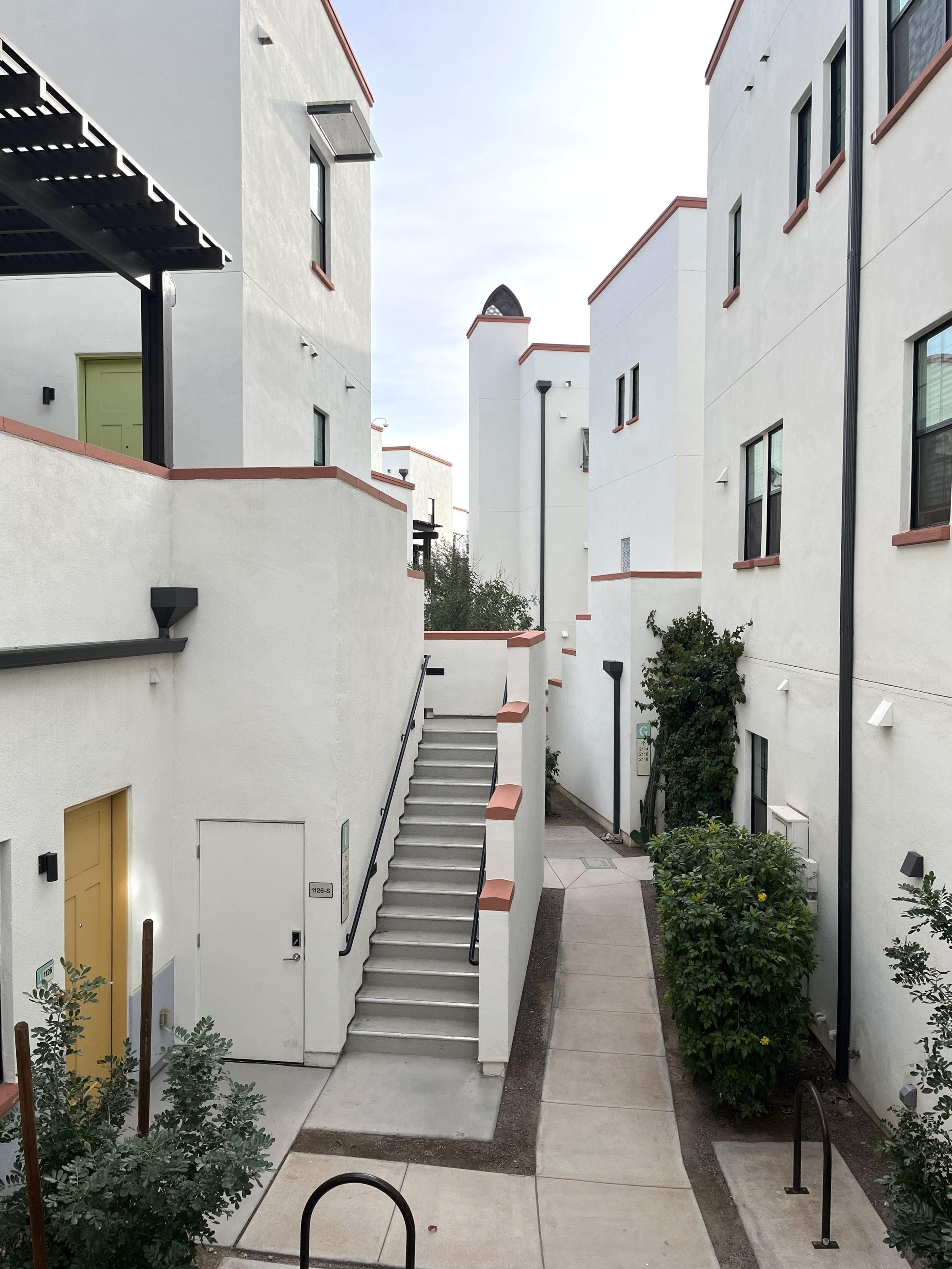
The way each apartment block is carefully carved and curated to shelter residents from the 100-plus-degree heat is a masterclass in intentional climate design. Without a doubt, Opticos, the Bay Area architecture firm behind the project, produced countless shadow studies to inform every placement, paseo orientation, and undulation of form. The resulting architectural language is distinctly contemporary yet warmly inviting—a sense of place deeply rooted in its Sonoran context. This atmosphere is crafted by the shifting shadows of alabaster three-story buildings with geometric inflections and terracotta accents, beautifully punctuated by colorful tiles, vibrant murals from local artists, and native desert landscaping.
This geometric response to the climate delights urban theorists, too. The strategic breaks in form along the paseos create natural "eyes on the street," offering countless opportunities to build safe connections with neighbors through spontaneous social interaction. Wandering these paths reminds me of European pedestrian streets and passageways, embracing life as it unfolds. The routes weave into intimate gathering corners and open up into a sculpturally shaded modern piazza bounded by a community fitness hall, a Korean grocery store, an inviting bar and restaurant, a posh coffee shop, and curious retail shops offering everything from clothing and stationery to pet supplies and mattresses.
Mobility Re-imagined
One of my biggest questions before arriving was simple: how does a car-free development actually work in the Phoenix metro? The answer lies in offering genuine choices through smart infrastructure and a seamless integration of transit modes. Residents receive Valley Metro passes, discounted ridesharing, access to scooters, and an on-site fleet of electric carshare vehicles starting at $7 an hour.
Cars are still welcome, of course. There is on-site parking dedicated to serving the restaurant, retail shops, events, and residents' guests. Yet, despite having zero residential parking, resident turnover remains remarkably low. It turns out that community life—that inconveniently un-American salve against loneliness—is far better nurtured by mixed-use retail, gathering plazas, quiet courtyards, and indoor third spaces than by the typical asphalt lake with a dedicated parking spot for every unit. This vibrant environment has attracted a remarkably diverse demographic, ranging from Arizona State University students and families utilizing housing vouchers to retired public officials. Living right alongside them is Culdesac's co-founder and CEO, Ryan Johnson, an avid e-bike enthusiast.
The Bigger Picture
Culdesac Tempe is more than just a successful project—it is a compelling proof of concept. The developer and property management team behind it envisioned a neighborhood built specifically to address our modern crises: traffic congestion and fatalities, the epidemic of loneliness, and an increasingly unpredictable climate.
Cities across America are paying attention. Charlotte, for example, has already cited Culdesac as a direct inspiration for its own transit-oriented developments. Sparking international attention, the project proves that even in the heart of American car country, a radically alternative model can do more than survive—it can thrive.
What We Can Learn
Climate-responsive design is no longer optional - it is essential. This is especially true in the Sonoran Desert valley, where days exceeding 100 degrees have grown in both frequency and duration over the decades. It forces us to ask: how must architecture evolve to meet local climate challenges that are only growing more extreme?
Balance parking needs with community needs. Removing mandatory city parking minimums per unit freed both the budget and the physical space for public realm investment. Compared to traditional developments of its size, Culdesac boasts triple the typical green space and offers abundant space for dynamic social interactions.
Design and scale matter. Human-scale spaces in a mix of intimate courtyards along meandering paseos create an environment that feels safe, comfortable, and engaging. Design creates a place and becomes a point of pride in communities.
Car Alternatives for a Freer World - Culdesac offers a comprehensive menu of transit options tailored to unique lifestyles, seamlessly integrating light rail access, e-bikes, scooters, ridesharing, and an on-site fleet of carshare and autonomous vehicles.
Diversity creates authenticity. Bringing together residents from all stages of life and income levels amplifies the neighborhood's authentic character. This social diversity is beautifully mirrored by the built environment, intentionally designed with vibrant, mixed-use retail grounding the street level and residential units sitting comfortably above.
The Experience
Walking through Culdesac on a January morning—watching college students make their way to campus by light rail or bike, young mothers meeting up for coffee with their babies next to them, and a retiree strolling toward the dog park with his American bulldog—I felt that rare sensation of experiencing the future in the present tense.
This is what post-car urbanism looks like. It isn't austere or sacrificial; rather, it is abundant with community, connection, and comfort. It is fundamentally designed for health and happiness. It is climate-smart and financially accessible—while rent remains competitive for the market, the true savings come from eliminating car expenses entirely. It is contemporary and vibrant, capturing the essence of that "cute neighborhood" feel while remaining deeply rooted in its local context.
Housing built for people, rather than cars, serves as the ultimate prototype for community. Culdesac proves that we can build this reality today—using modern systems, contemporary aesthetics, and true freedom of mobility—all while simultaneously addressing climate, health, affordability, and human connection.
Final Thoughts
Culdesac Tempe isn’t perfect, but perfection isn’t the point. Possibility is the point. Proof of concept is the point. This development demonstrates that American urbanism can evolve, and that car-free living can succeed even in the most car-dependent contexts. It proves that thoughtful design can create comfortable microclimates and meaningful communities—and that people are genuinely hungry for alternatives to the suburban status quo.
I stepped back onto the light rail to continue my journey to the airport. As I returned to the desert of parking lots and strip malls, Culdesac felt like an oasis, indeed—but also like a beginning. It is a glimpse of what becomes possible when we design neighborhoods for people instead of vehicles.
The future of American neighborhoods might just be unfolding right now in the Sonoran Desert, and it is well worth the trip to see it for yourself.
Culdesac Tempe is located approximately 2.5 miles from downtown Tempe, directly adjacent to a light rail station on Apache Boulevard. Phase One, completed in 2023, houses roughly 300 residents across 288 units. Full build-out is expected to include over 700 units housing 1,000 residents. For more information, visit culdesac.com.
#Architecture #UrbanDesign #NewUrbanism #TransitOrientedDevelopment #CityPlanning #HumanScale #Walkability #ClimateResponsiveDesign #WhereIsTheParking #PeopleOverCars #AsphaltSea #NoParkingRequired #PostCarFuture #UrbanOasis #RethinkHousing #CuldesacTempe #DesertLiving #SonoranDesert #CarFree #SustainableLiving #15MinuteCity #TempeAZ #ArizonaArchitecture #ArchitectLife #DesignThinking #FlorenceTsang #UrbanTheory #FutureOfCities #BlueprintForChange
Photographed by: Florence Tsang, Architect