
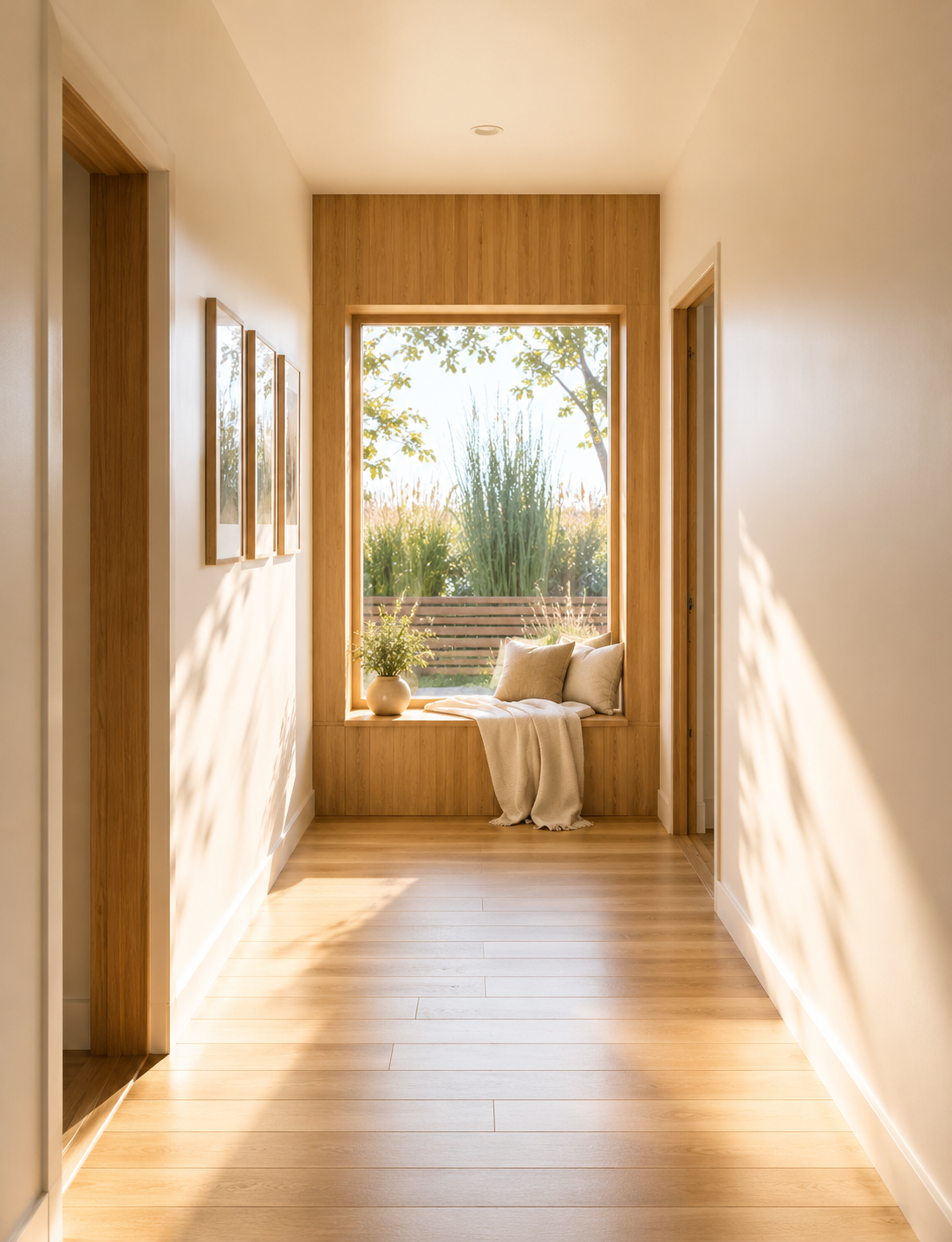
SENSORY DESIGN
How does your environment feel to you?
We experience architecture through our senses, and no two people experience the same space in exactly the same way.
Light. Sound. Temperature. Texture. Movement. Color. Smell. Openness. Shelter. Social space. Control.
Sensory Design starts by noticing those differences—and asking what architecture can do with them.
Your space has sensory settings.
Every environment has them. So do you.
Some people need bright light to feel awake; others immediately reach for sunglasses. Some concentrate with activity around them; others need visual stillness. One person wants an open room where they can see everything. Another wants a protected corner.
Neither is better.
Sensory Design looks at the relationship between the person and the place—and how architecture can support that relationship more intentionally.
Then your beautiful Eames-dot sensory-settings graphic belongs right here. This should be visual, not a giant explanatory paragraph.
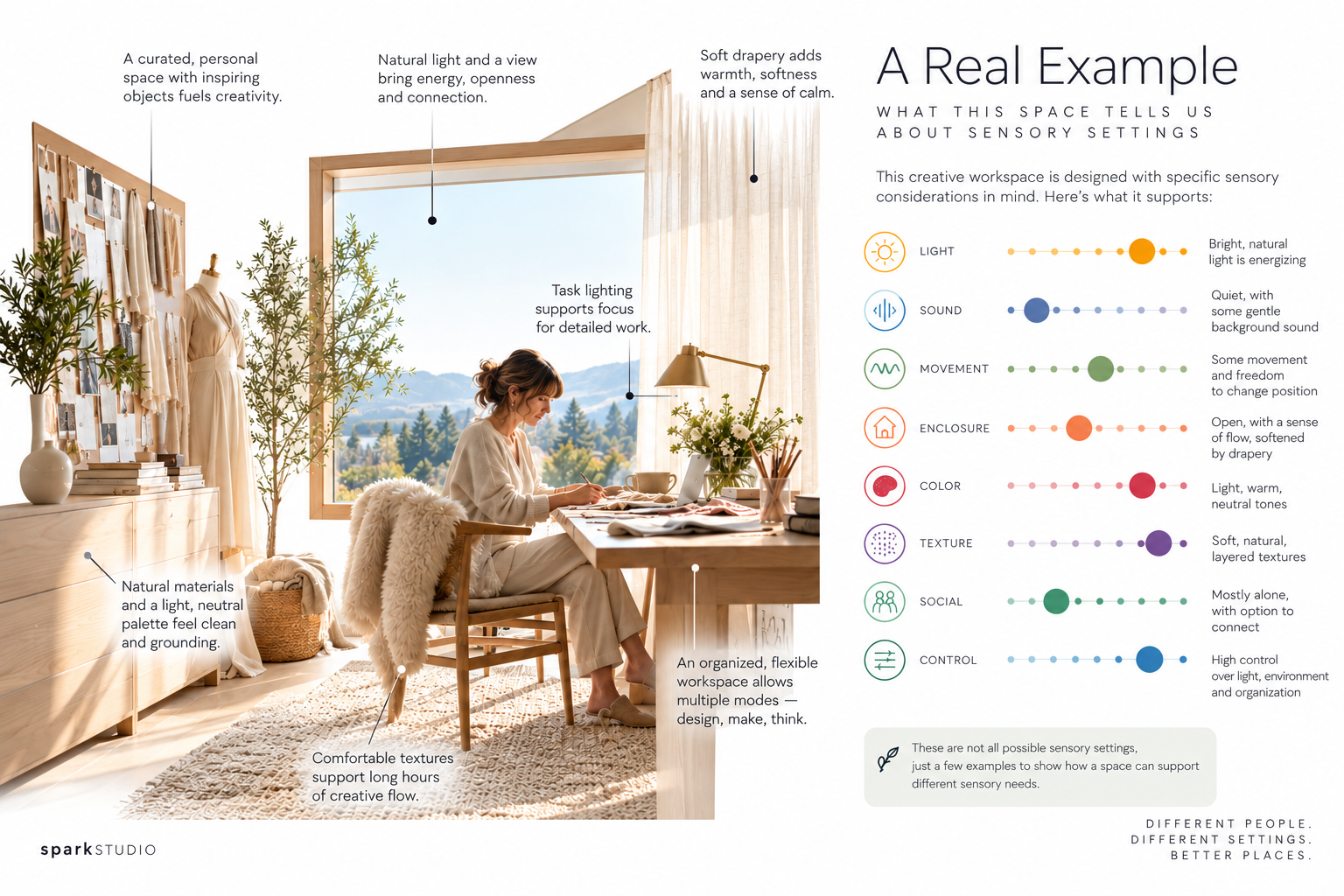
From Person To Space
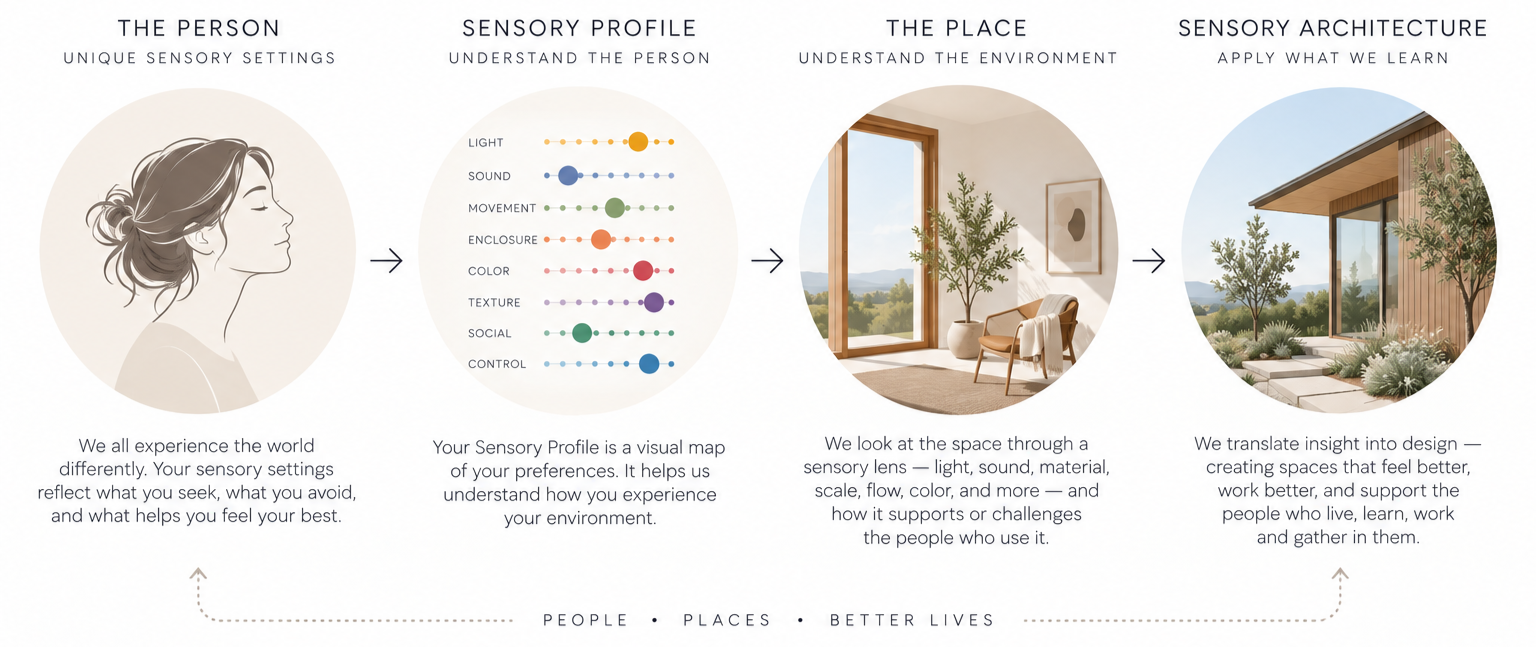
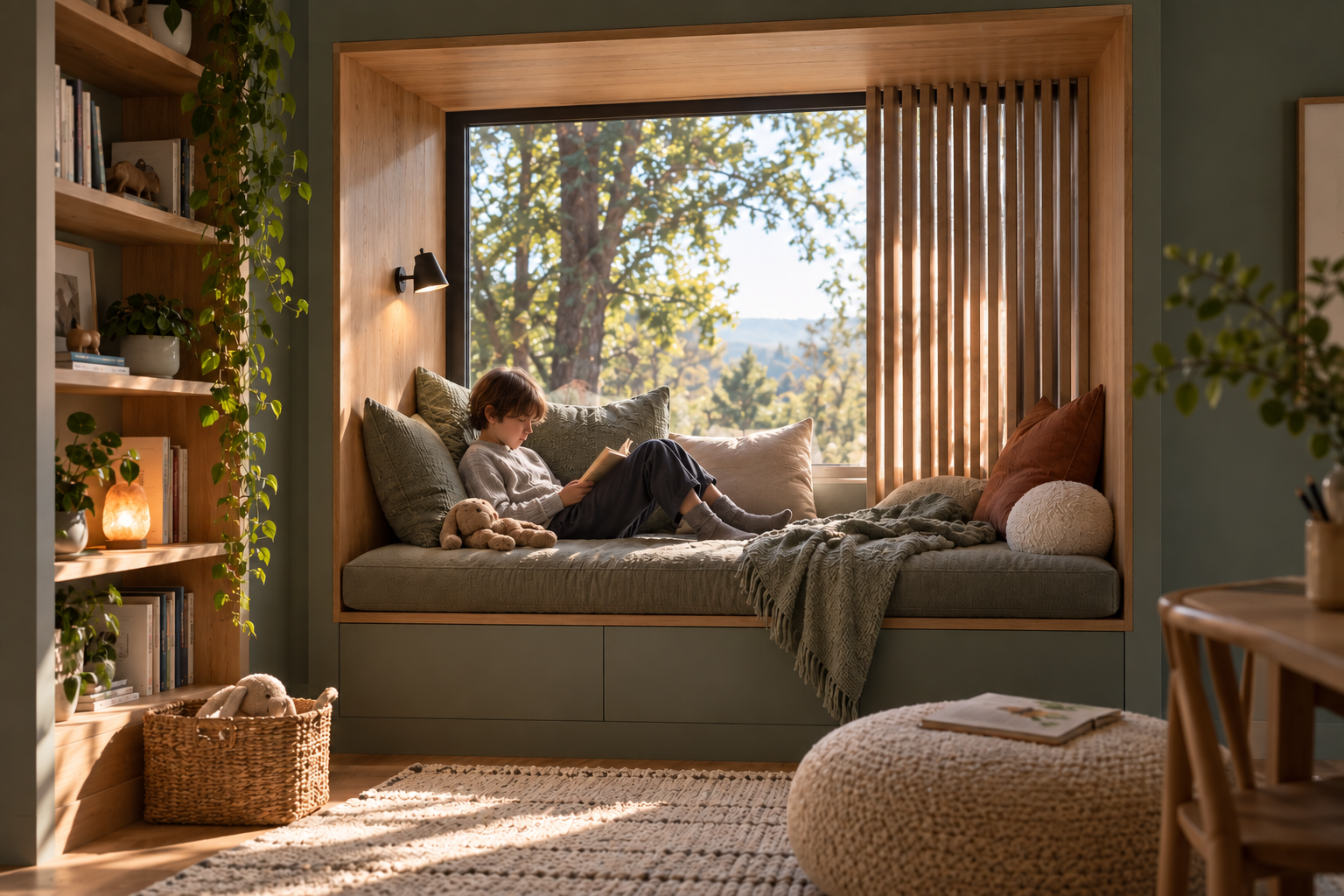
Two Way To Explore Sensory Design
Build Your Sensory Profile
We're developing an architecture-focused way of understanding how people experience space—and we're learning directly from people's lived experience.
Participate in our ongoing Sensory Design research and explore your own preferences around light, sound, temperature, texture, movement, openness, social space, control and more.
You'll help us develop the methodology while learning something about yourself along the way.
Want to participate?
Choose a time for a 30-minute virtual Sensory Profile Conversation. We’ll talk about how you experience your environment and begin building your Sensory Profile together.
Sensory Design + Consulting
If there is a room, home, workplace, school or project that isn't quite working, we can look at it through a sensory lens.
We start with the people: what they seek, what they avoid, where their needs conflict, and what gives them greater comfort and control.
Then we look at the architecture.
That might mean reviewing an existing space, reviewing plans already in design, or incorporating sensory thinking into a new project.
Want to discuss your space?
Book a 30-minute Project Introduction Call. Tell me a little about your space, what you’re hoping to change, and we’ll talk about how Sensory Design might fit your project.

Why I'm exploring this?
I'm an architect, but I've always experienced architecture very physically.
I notice how a room changes when the light changes. How openness can feel exhilarating to one person and exposing to another. How material, proportion, sound, movement and enclosure affect the body before we have words for what we're experiencing.
Over years of designing spaces—and learning from neurodivergent people and families in my own life—I became increasingly interested in something architecture doesn't ask often enough:
What does this space feel like to the person actually experiencing it?
Sensory Design grew from that question.
— Lidia Birukova, Architect + Principal, sparkSTUDIO